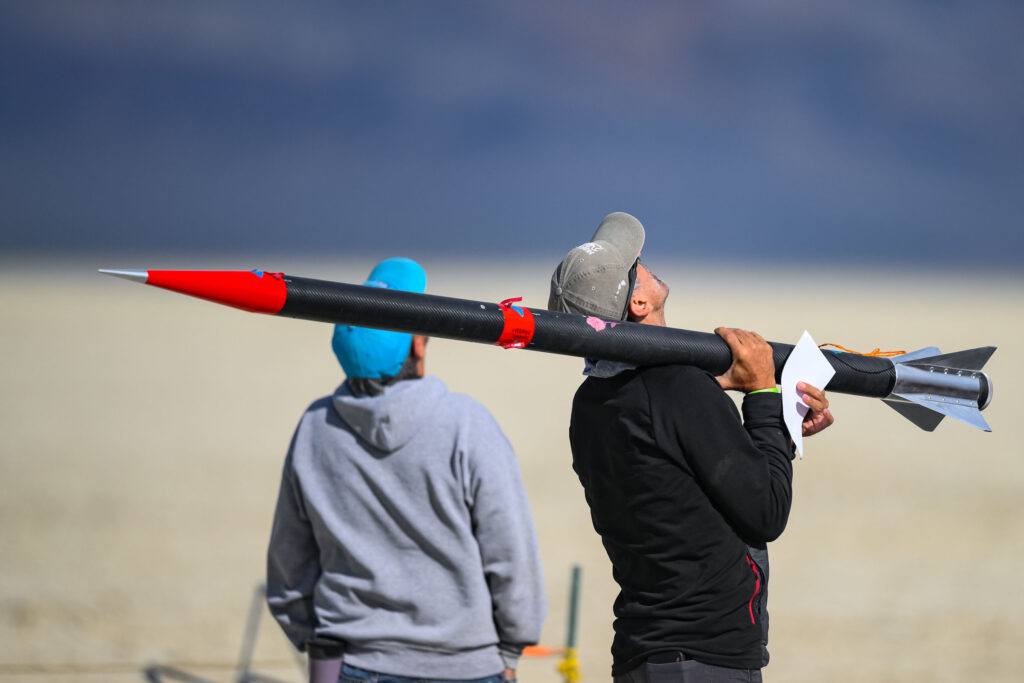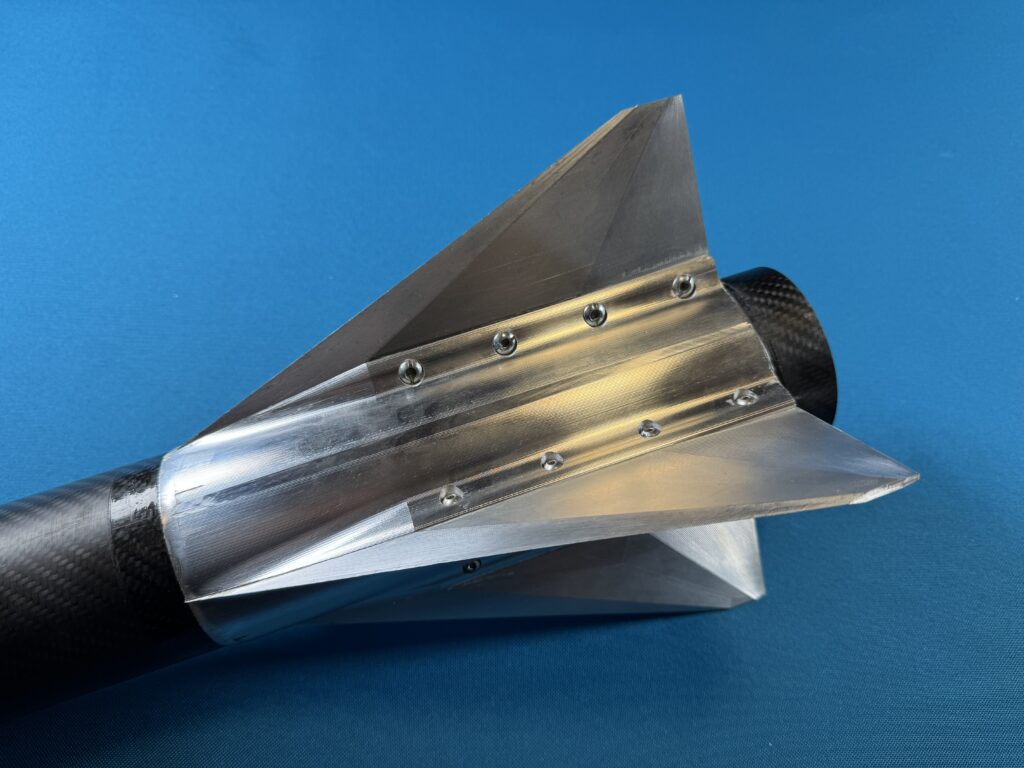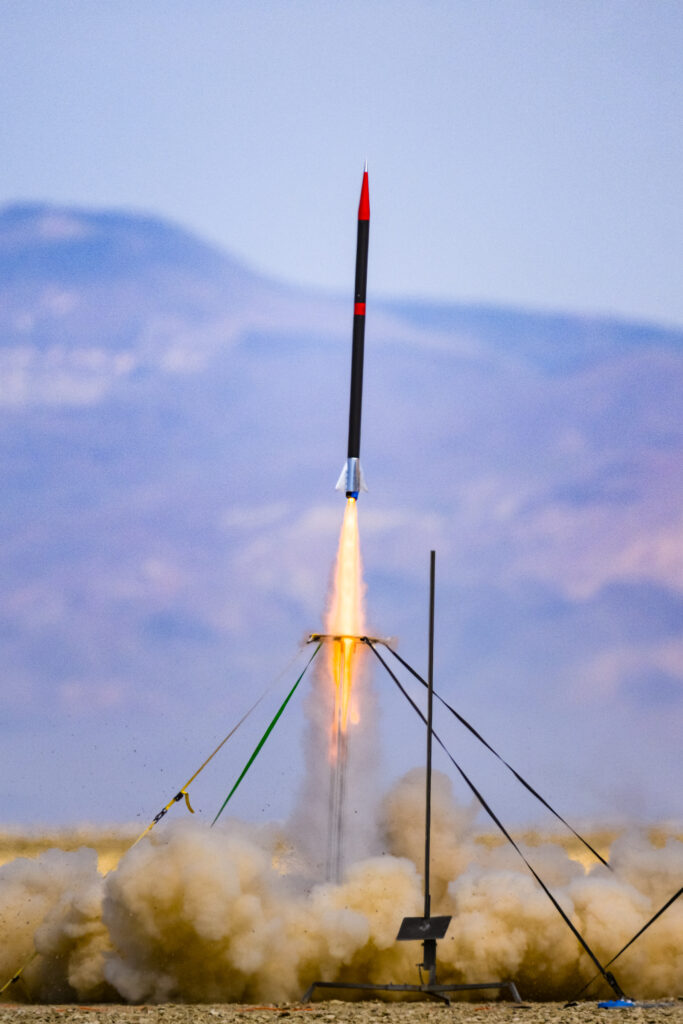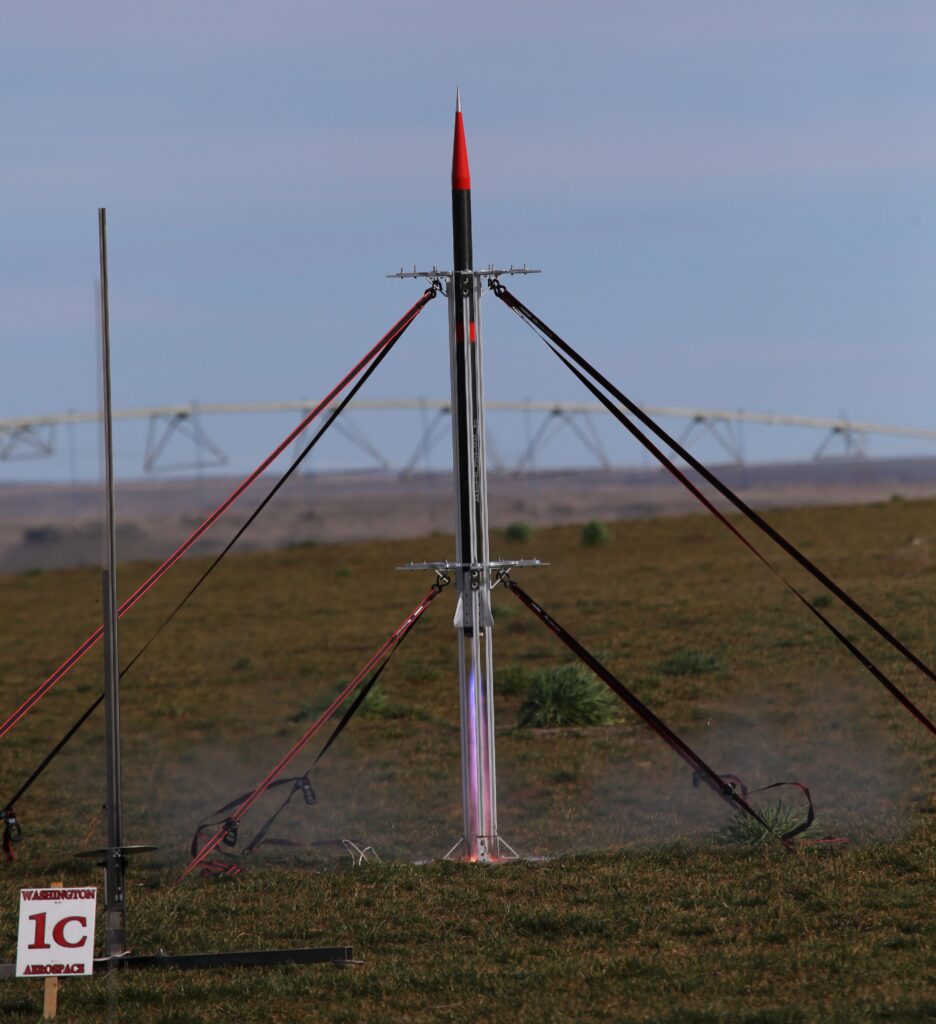
The concept behind the proposed Level 3 design is effectively the copy of a 3-inch minimum diameter rocket that I have used as a testbed for my Level 3 design as well as for my modular aluminum fin assembly.
To date this rocket has had two successful flights – once at Balls 33 up to 17,500′ doing 1.4M (setting a Group EX Altitude record) and recently at MisFITS to ~8,000′ doing 0.8M.
Motor proposals:
1) Long burn Aerotech M865W.
2) The alternative would be the Aerotech M1850W
The only difference would be to stretch the sustainer tube by 7″ to accommodate the larger 75/ 7680 motor case.
Question relating to HPR Level 3 HPR Certification Requirements:
Section 2. Rocket Requirements:
The certification rocket must be substantially built by the certifying flyer. “Substantially built” will be defined, as a minimum, as:
Question: The proposal for this design is to use my modular aluminum fin assembly that I will “substantially build” myself – this is not a purchased fin canister. Will this be allowed in the context of this NAR guidance?
The reality is that I can and know how to laminate fins onto a min-diameter airframe and do the vacuum bag lamination. Making this aluminum assembly is orders of magnitude more complex than a standard lamination process. So when it comes to demonstrating engineering and technical skills then I would argue that this modular assembly will truly showcase my skills.
Other core design features:
These systems have been and refined during last flights.